
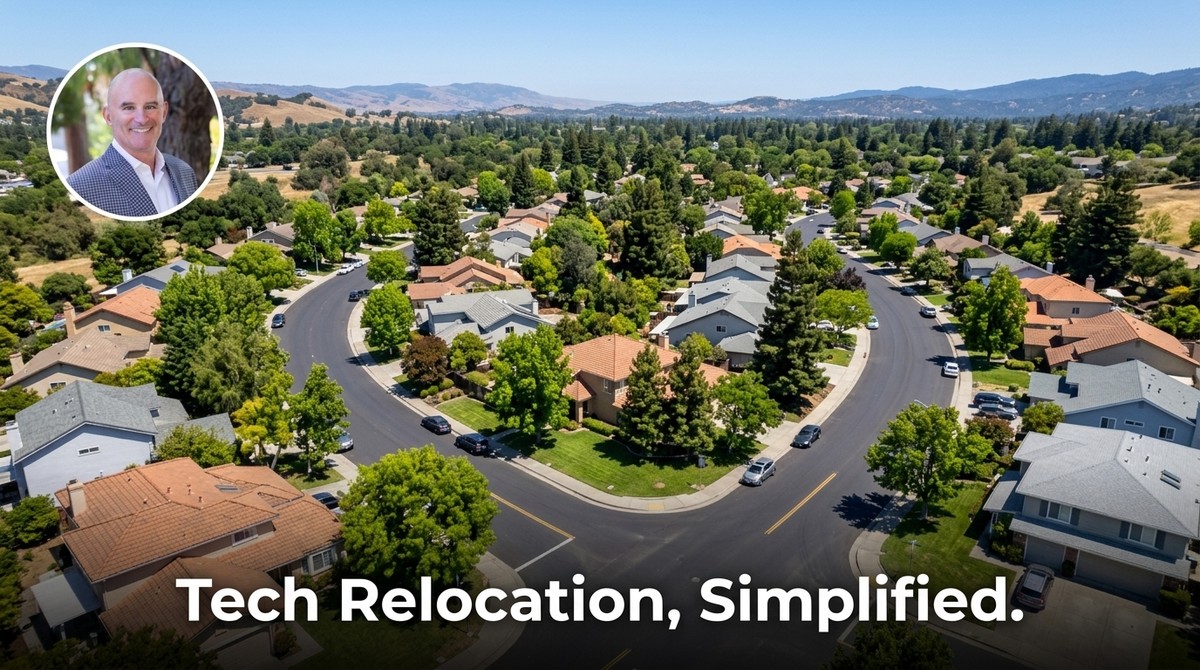
Facilitating Corporate Tech Relocation in Campbell
The macroeconomic landscape of Silicon Valley real estate remains inextricably linked to the recruitment cycles of major technology firms. As we analyze the ongoing demand vectors across Santa Clara County, we observe that corporate tech relocation continues to act as a primary driver of housing absorption. Professionals migrating to the South Bay require specialized acquisition strategies that account for compressed timelines, complex compensation packages, and severe inventory constraints. The Norcia Team systematically tracks these variables to position our clients favorably within a highly competitive acquisition environment.
Inbound executives and senior engineers face a unique set of market realities when transitioning to the region. The interplay between limited housing supply and high-liquidity buyers necessitates a data-driven approach to property selection and contract negotiation. By examining a recent case study involving a move to Campbell, we can isolate the exact financial mechanisms and remote execution protocols that yield successful property acquisitions. This analysis serves as a comprehensive framework for understanding how tech-driven wealth and RSU liquidity dictate market leverage.
The Mechanics of Corporate Tech Relocation
Corporate transitions into the South Bay generally operate on aggressive schedules, often demanding property identification, escrow progression, and closing within a forty-five to sixty-day window. These compressed timelines force buyers to rely heavily on remote viewing technologies and hyper-local market intelligence provided by their representation on the ground. We find that successful acquisitions under these conditions depend on a rigorous pre-approval process that fully underwrites Restricted Stock Units (RSUs) and sign-on bonuses before a single property is toured. Buyers who delay this financial structuring routinely lose out in competitive bidding environments.
Furthermore, the utilization of temporary housing introduces a critical variable into the strategic timeline. Many tech firms provide thirty to ninety days of interim accommodation, which creates a hard deadline for executing a permanent housing purchase. If a buyer fails to secure a home within this window, they risk absorbing exorbitant short-term rental costs that erode their available capital for down payments. We strategically leverage this housing period to conduct targeted sweeps of off-market and newly listed inventory, ensuring that our clients maximize their allotted benefits while avoiding costly transitional leases.
Remote closing processes have evolved significantly to accommodate these high-net-worth inbound professionals. Escrow companies and title officers in Santa Clara County now routinely execute transactions using mobile public notaries and secure digital wiring protocols across state and international lines. This structural shift allows buyers to finalize complex acquisitions without ever physically sitting at a closing table in California. By front-loading the logistical requirements of a remote close, we eliminate friction during the final days of escrow and secure the asset precisely on schedule.
Campbell Market Constraints and Inventory Data
To understand the specific challenges of purchasing in Campbell, one must first analyze the granular inventory data characterizing the current Santa Clara County market. Campbell offers a highly desirable blend of suburban space, top-tier municipal services, and immediate proximity to major transit corridors like Highway 17 and Interstate 880. This geographic advantage results in severely constrained single-family inventory, with months of supply frequently dipping below the one-month threshold. When inventory drops to these levels, the absorption rate accelerates, meaning homes are placed under contract almost immediately upon listing.
Our analysis of 2026 South Bay real estate projections indicates that Campbell will continue to experience disproportionate demand from mid-career professionals. Unlike the ultra-luxury estates of Saratoga or Los Gatos, Campbell provides an entry point for buyers seeking premium equity growth without the immediate requirement of a five-million-dollar capital outlay. To contextualize this demand, we track several core metrics that dictate pricing leverage in this specific municipality.
- Average Days on Market (DOM): Campbell consistently registers a DOM of under fourteen days for accurately priced single-family homes.
- List-to-Sale Price Ratio: Properties frequently close at three to seven percent above the initial asking price due to intense buyer competition.
- Inventory Velocity: The rate at which new listings are absorbed by the market remains exceptionally high, leaving minimal margin for hesitation.
- Cash Equivalency: Buyers utilizing large down payments derived from stock liquidations effectively operate as cash buyers, dictating the terms of engagement.
This data underscores the necessity of a decisive, well-capitalized approach when entering the Campbell real estate market dynamics. Buyers cannot rely on standard contingencies or protracted negotiation periods to secure highly desirable properties. Instead, they must submit offers that demonstrate immense financial strength and structural simplicity, thereby minimizing the seller’s perceived risk of escrow cancellation. We engineer these offers by synthesizing our clients’ compensation structures with preemptive property inspections and aggressive contingency removals.
Case Study: Securing a Campbell Home Remotely
We recently facilitated a transition for a senior software engineer moving from the Pacific Northwest to a major campus in the South Bay. The client required a three-bedroom single-family home in Campbell, mandated a commute time of under twenty minutes, and possessed a strict forty-five-day corporate housing window. Given the geographic distance, the client could not attend physical open houses, necessitating a fully remote acquisition strategy. We immediately deployed our digital property assessment protocols to evaluate incoming inventory against their rigorous structural and financial parameters.
Upon identifying a suitable off-market property in the San Tomas neighborhood, we initiated our remote evaluation sequence. This process involved conducting unedited, high-definition video walkthroughs that highlighted potential structural defects, neighborhood acoustics, and precise lot boundaries, rather than simply showcasing cosmetic finishes. By providing an objective, data-rich assessment of the asset, we enabled the client to make a multi-million-dollar purchasing decision with absolute confidence from a distance of eight hundred miles. This level of analytical rigor is mandatory when executing remote acquisitions in high-stakes environments.
The negotiation phase required precise execution, as we anticipated competition from local buyers who had physically toured the property. To outmaneuver these competing interests, we structured an offer that prioritized seller certainty over absolute price escalation. By leveraging the client’s verified tech compensation and securing an underwritten pre-approval, we presented an offer with heavily compressed contingency timeframes. This strategic alignment of buyer liquidity and seller security proved decisive in competitive multiple offer scenarios, ultimately securing the property prior to widespread market syndication.
Navigating RSU Liquidity for Down Payments
A critical component of this transaction was the strategic liquidation of vested RSUs to fund a substantial down payment. In Silicon Valley, tech equity is not merely a bonus; it is the primary instrument of real estate capitalization. However, the timing of stock vesting schedules often conflicts with the immediate capital requirements of an aggressive escrow timeline. We coordinated directly with the client’s wealth manager and preferred regional lender to establish a margin loan against unvested shares, bridging the liquidity gap without triggering an immediate, unfavorable taxable event.
This financial structuring allowed the client to present a non-contingent forty percent down payment, effectively neutralizing competing offers that relied on standard ninety-seven percent loan-to-value conventional financing. Sellers in Campbell are acutely aware of the appraisal risks associated with low-down-payment offers in an escalating market. By eliminating the appraisal contingency through massive equity deployment, our client secured a distinct tactical advantage. We continually advise inbound professionals to audit their equity vesting schedules months prior to initiating a corporate tech relocation.
The Remote Closing and Escrow Process
The final phase of this case study involved orchestrating a frictionless remote closing process. Escrow mechanics in California require specific wet signatures on deed transfers and loan documents, which complicates out-of-state finalizations. We preemptively scheduled a mobile public notary to meet the client at their current residence in Seattle precisely seventy-two hours prior to the contractual closing date. This schedule provided ample buffer for the overnight routing of physical documents back to the Santa Clara County title office.
Concurrently, we managed the secure wire transfers of the finalized down payment directly from the client’s brokerage accounts to the escrow holder. By utilizing established commercial wiring protocols, we mitigated the risks of delayed settlement funds that frequently plague complex tech compensation structures. The property officially recorded on a Tuesday afternoon, perfectly aligning with the expiration of the client’s corporate housing benefit. The seamless transition from temporary lodging to long-term homeownership exemplifies the value of meticulous logistical planning.
Strategic Takeaways for Silicon Valley Buyers
The success of a corporate tech relocation relies entirely on the precise synchronization of capital liquidity, market data, and remote logistics. Buyers entering the South Bay cannot approach the market with the passive strategies utilized in less competitive regions. Every phase of the acquisition, from the initial financial underwriting to the final notary appointment, must be executed with mathematical precision. We observe that clients who internalize these mechanics secure superior assets while protecting their long-term equity positions.
Ultimately, navigating inventory constraints in municipalities like Campbell requires an expert understanding of how macroeconomic tech trends influence micro-local housing dynamics. The Norcia Team remains committed to providing the analytical frameworks necessary for successful property acquisitions. By prioritizing data-driven decision-making over emotional purchasing impulses, inbound professionals can effectively leverage their corporate compensation to establish a permanent, profitable foothold in the Silicon Valley real estate market.
Posted on August 16, 2026 by The Norcia Team in Uncategorized
← Back to Blog