
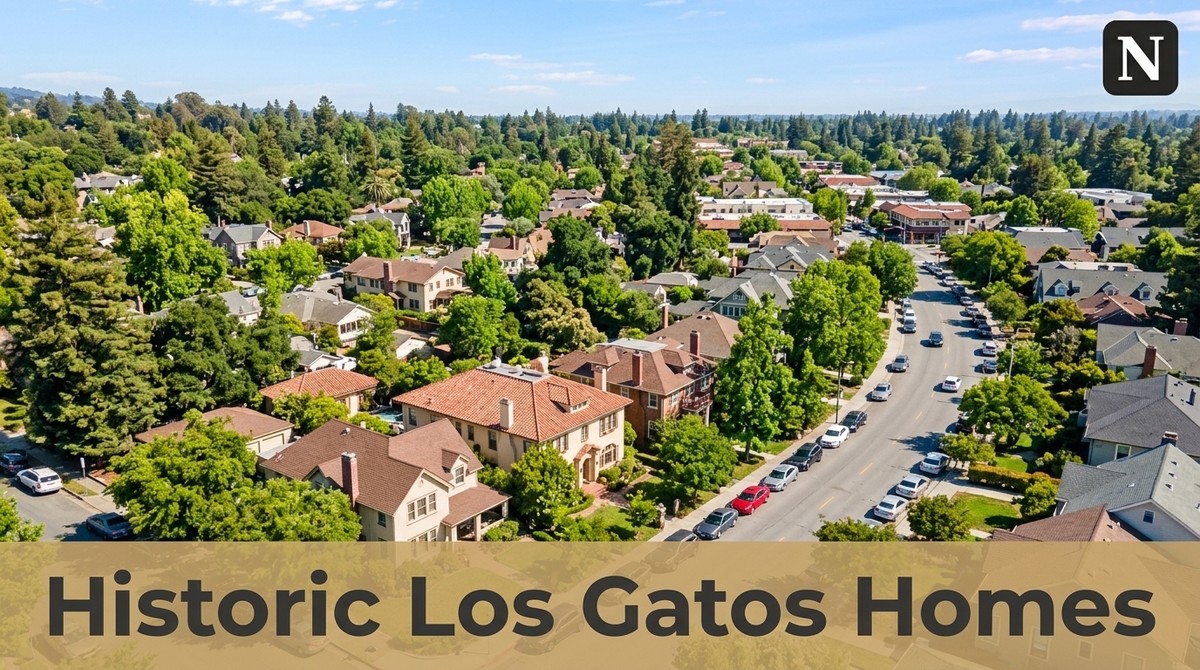
Almond Grove and Glen Ridge: Valuing Los Gatos Historic Homes
The micro-markets of Almond Grove and Glen Ridge represent a unique intersection of highly restricted inventory and sustained buyer demand. Purchasing Los Gatos historic homes in these neighborhoods requires a clinical understanding of valuation metrics and preservation ordinances. Because these properties sit mere steps from North Santa Cruz Avenue, they command a significant price premium driven by walkability and architectural scarcity. We continually observe that tech-driven wealth targets these specific enclaves as a reliable vehicle for equity preservation. The inherent limitations on new construction within these districts ensure that existing assets retain their leverage in any economic cycle.
Valuing Los Gatos Historic Homes in Almond Grove and Glen Ridge
The valuation models for historic properties in downtown Los Gatos diverge sharply from standard single-family tract homes in Santa Clara County. Buyers of Los Gatos historic homes must account for strict architectural guidelines that limit structural expansions and exterior modifications. These regulatory constraints directly suppress the supply of modernized inventory, which in turn compresses absorption rates for turnkey properties. We track these metrics closely to determine accurate pricing thresholds for buyers entering this highly competitive sector. Our data sets reveal that historical provenance combined with modern infrastructure yields the highest possible valuation multiplier.
Almond Grove, characterized by its grid of late nineteenth-century Victorian and Craftsman structures, exhibits distinct velocity trends compared to the broader South Bay market. Glen Ridge offers slightly larger lot sizes and a blend of architectural styles, which introduces different appraisal variables. In both neighborhoods, the premium paid for proximity to the downtown commercial core often offsets the capital expenditures required for structural upkeep. Investors and owner-occupants alike must evaluate the cost per square foot against the anticipated appreciation yield. Understanding Los Gatos market desirability requires analyzing these highly localized block-by-block valuation disparities.
Inventory Constraints and Pricing Mechanics
Analyzing the supply-side data reveals a persistent deficit in available listings within these historic overlay zones. The turnover rate in Almond Grove and Glen Ridge remains exceptionally low, as legacy owners tend to hold assets for decades to capitalize on long-term equity growth. When a property does enter the market, it frequently triggers rapid liquidity deployments funded by robust technology sector compensation packages. Our data indicates that correctly priced homes in these neighborhoods rarely exceed a fourteen-day window before entering contract. This velocity demands that buyers maintain absolute financial readiness before touring properties.
- Strict zoning ordinances prevent high-density redevelopment, permanently capping total housing units and driving up the land value ratio. This artificial supply cap guarantees that existing inventory maintains its leverage during broader market corrections.
- Turnkey properties with modernized plumbing and electrical systems command a fifteen to twenty percent premium over deferred-maintenance equivalents. Buyers utilize high cash positions to secure these assets without waiting for lengthy construction timelines.
- Proximity to North Santa Cruz Avenue correlates directly with a measurable decrease in days on market across all price tranches. Properties located within a three-block radius of the commercial sector exhibit the highest transaction velocity.
- Historic overlays prevent the dilution of neighborhood character, functionally acting as a protective moat for property valuations. Investors view these regulatory frameworks as a stabilizing force for long-term equity preservation.
The Financial Impact of Historical Preservation Guidelines
Owning a heritage property requires strict adherence to local municipal codes regarding exterior alterations and material sourcing. The Los Gatos Historic Preservation Committee reviews modifications to ensure architectural integrity, a process that extends project timelines and increases renovation budgets. We advise clients to underwrite these anticipated carrying costs during the initial acquisition phase. Failing to accurately model these expenses can severely diminish the anticipated return on investment for investors engaged in property rehabilitation. Rigorous financial modeling is a mandatory component of acquiring any structure governed by these municipal preservation mandates.
The capitalization of these renovation costs ultimately translates into higher baseline property values for the entire neighborhood. When one homeowner successfully navigates the permit process and executes a high-end restoration, it establishes a new ceiling for comparable sales. Buyers leveraging high-net-worth liquidity pools recognize this dynamic and often target unrenovated structures as strategic value-add opportunities. This continuous cycle of localized investment insulates Almond Grove and Glen Ridge from broader macroeconomic pricing corrections. Evaluating the long-term yield of capital expenditures and property renovations ensures that buyers do not over-leverage their acquisition capital.
Analyzing Absorption Rates and Buyer Demographics
The buyer profile for these specific micro-markets consists primarily of senior technology executives and dual-income households seeking elite school districts combined with urban walkability. This demographic enters the transaction equipped with substantial down payments, frequently utilizing stock options to bypass traditional lending constraints. Consequently, the absorption rate for premium historic inventory remains insulated against fluctuations in conventional mortgage interest rates. We monitor this decoupling effect to provide strategic timing recommendations for our seller clients. The sustained influx of tech-driven wealth guarantees a continuous baseline of demand regardless of secondary market bond yields.
When analyzing comparative data between Glen Ridge and Almond Grove, slight variations in buyer preference emerge based on lot utility. Glen Ridge properties frequently offer deeper setbacks and enhanced privacy, appealing to buyers prioritizing outdoor square footage and detached garage structures. Almond Grove attracts purchasers focused on immediate pedestrian access to the commercial district, resulting in slightly higher price-per-square-foot valuations for smaller lots. Understanding these granular distinctions is essential for structuring competitive offers in a low-inventory environment. Reviewing our data on evaluating absorption rates and property positioning provides clarity on why certain parcels command aggressive bidding wars.
Tax Implications and Proposition 19 Dynamics
The transfer of generational wealth heavily influences the inventory metrics within Almond Grove and Glen Ridge. Long-term homeowners possess highly favorable property tax bases established decades ago under Proposition 13. The implementation of Proposition 19 has forced many trusts and estates to reevaluate their holding strategies, as inherited properties utilized as rentals now face reassessment to current market value. We analyze these legislative shifts to forecast upcoming inventory releases from trusts and estate liquidations. This data stream allows our clients to position themselves ahead of off-market acquisition opportunities.
Sellers looking to exit these historic districts often utilize Proposition 19 to transfer their primary residence tax base to a replacement property elsewhere in California. This mechanism facilitates liquidity for aging demographics while preserving their operational cash flow. We orchestrate these complex transactions by aligning the disposition of the Los Gatos asset with the acquisition of the replacement property to ensure zero disruption in tax liability continuity. For an in-depth breakdown of these mechanisms, reviewing the strategic analysis of property tax base transfers is a critical preliminary step.
Strategic Acquisition Protocols for South Bay Buyers
Successfully acquiring an asset in these highly restricted zones requires a clinical, data-first approach to contract negotiation. We construct offers that leverage definitive market comparables while structuring contingencies to account for the unique inspection requirements of century-old structures. Foundation integrity, upgraded electrical panels, and modernized HVAC systems are critical inspection points that dictate final negotiation leverage. A well-calibrated offer must balance aggressive pricing with adequate due diligence protections. Understanding the precise capital requirements for retrofitting allows buyers to negotiate from a position of absolute analytical strength.
Sellers in these neighborhoods operate from a position of profound strength, meaning buyers must present flawless financial credentials upon initial submission. We synthesize local market data to guide our clients on the precise equity deployment required to outmaneuver competing bids. Whether navigating the complexities of a 1031 exchange or liquidating RSUs for a cash acquisition, the financial mechanics must be perfectly aligned before entering the market. Executing strategic multiple-offer negotiation tactics is the only reliable methodology for securing tier-one assets in Glen Ridge and Almond Grove.
Frequently Asked Questions
Market participants frequently require clarification on the specific economic and regulatory mechanics governing Los Gatos historic properties. We compile these data points to streamline the underwriting process for prospective buyers. The following points address the primary variables that influence asset valuation in Almond Grove and Glen Ridge. Establishing a baseline understanding of these factors minimizes friction during the negotiation phase.
How do preservation guidelines impact property values?
Preservation guidelines restrict the supply of heavily modernized or expanded properties within the neighborhood boundaries. By capping the ability to increase square footage or alter architectural facades, these regulations inherently drive up the value of homes that have already undergone approved, high-end renovations. The bureaucratic friction of the permitting process functions as a premium multiplier for turnkey assets.
Why are days on market so low for these neighborhoods?
The combination of high tech-driven wealth, RSU liquidity, and an absolute cap on new construction creates an extreme supply-demand imbalance. Buyers target Almond Grove and Glen Ridge for their walkability to North Santa Cruz Avenue, resulting in absorption rates that consistently outperform the broader Santa Clara County averages. Homes priced accurately against recent comparables routinely sell within a two-week timeframe.
What financial contingencies are critical when purchasing historic homes?
Buyers must allocate capital for specialized inspections targeting century-old foundations, legacy plumbing systems, and outdated electrical grids. Standard appraisal contingencies often fall short if the buyer has not accurately modeled the cost of municipal retrofitting requirements. We mandate that our clients underwrite these potential capital expenditures before submitting a binding offer to preserve their financial leverage.
Posted on September 16, 2026 by The Norcia Team in Uncategorized
← Back to Blog